"Studying the Holocaust changed the way I make decisions." - Student

Tuesday, September 13, 2011

Between the Two Rivers, Second Edition


Aida Kouyoumjian is a local speaker who tells her parent's story of survival in the Armenian Genocide. She recently released the second edition of her book, "Between the Two Rivers," via Coffeetown Press.

The first edition, available at the Holocaust Center's library, won first place (Washington State) in the National Federation of Press Women (NFPW) At-Large Communications Contest in the nonfiction: history category.

Aida is a member of the Holocaust Center's speakers bureau and speaks frequently to students in the Pacific Northwest region.

Find out more about Aida's story by visiting her
blog.

For more information on book purchase and/or to watch a trailer about the book,
click here. The new edition will be available soon in the WSHERC library, definitely worth reading!


Wednesday, September 7, 2011

New to the Center!

Hi all! My name is Brenna, and this is my 3rd official day interning at the WSHERC. I'm a senior at the University of Washington, born and raised in Montana, studying social sciences, and will graduate this March with an undergraduate degree in 'law, societies, and justice'. To be honest, I'm not sure where this degree will take me, but I'm interested in working with the community towards the awareness of the greater good! I continually work in staying open to what comes my way, with as broad of an outlook I can manage. ;)

Monday, August 8, 2011

Berlin's Holocaust Memorial


Berlin Memorial to the Murdered Jews
By Debbie Carlson, Teacher at Meridian Middle School, Kent

Debbie Carlson just recently returned from a Holocaust study trip to Amsterdam and Berlin, offered by Museum Without Walls and supported by the Holocaust Center. Debbie is one of the Holocaust Center's Master Teachers and a recent alumni of the Jewish Foundation for the Righteous Summer Institute.

I walked around a corner or across a street and there it was, I recognized it immediately. We were a group of fifteen, but were given seven minutes to wander alone. So I dove in, literally. The memorial was made as a maze of rectangular cement blocks all the same width and length, but different heights. I think I learned later that there were 2,711 different blocks. I walked through them as you would walk through a maze. No identification. No words. No labels. Just acres of these concrete blocks. In some ways they reminded me of coffins.

I wanted to just sit lost among the blocks, but there was no time. I had to process my feelings quickly and rejoin the group. It was very difficult to consider the murder of 6,000,000 Jews being represented by acres of concrete tomb- looking blocks in such a short time. I kept noticing how the ground was uneven, there were places where it was so slanted one felt off balance, the passage ways were dark and narrow - only enough room for one person at a time, and the surfaces of the blocks created an undulating effect as I looked across the sea of concrete blocks. Suddenly I imagined what it must have felt like for the Jews to have their own lives thrown into such chaos. They had no solid ground anymore. They were constantly being squeezed into smaller, tighter, scarier spaces. They had no straight path to follow; they never knew what was around the next corner. The memorial began to make perfect sense.

As I rejoined our group I asked the guide if there was an official entrance or a sign or something to tell the public what the place was all about. No such sign and no such designated entrance. No wonder there were people climbing all over the blocks, sunning themselves, jumping from box to box enjoying a summer afternoon. I was horrified. But didn't the world do that while 6,000,000 Jews were being murdered?

Wednesday, July 20, 2011

Help us welcome these NEW BOOKS to our collection!

The following books can be borrowed from our library or by emailing info@wsherc.org

Storming the Tulips
Ronald Sanders
“The stories in this book make us realize how important it is to teach compassion, understanding and tolerance for people who may appear to be different than us. These life-lessons are even more important in today’s society. We must learn about history to understand our current world situations.”
Diana Schumacher, 8th grade Middle School Teacher, St. Louis, MO


Is It Night or Day? A Novel of Immigration and Survival, 1938-1942
Fern Schumer Chapman
"...This book is an exceptional story of survival and devotion to homeland. The author's note and afterword contain inspiring information about the background and reasoning behind this book. Anne Frank: Diary of a Young Girl and this book would be great companions for showing how children's lives were affected by the Holocaust. This is a wonderful study of the Holocaust in a way that young readers will understand. Highly Recommended."
Jo Drudge, Library Media Connection, Starred Review


In the Garden of Beasts: Love, Terror, and an American Family in Hitler’s Berlin
Erik Larson
Excerpt from the Seattle Times :
“A nonfiction chronicle, based on the lives of an American family who spent a year in Berlin as Hitler rose to absolute power, Larson's book raises the question the world still struggles with: How do we know implacable evil when we see it? When is enough enough? ...As a suspense narrative, "Beast" achieves mixed results: It's hard to warm up to the well-meaning but outmanned Dodd and his feckless, flirtatious daughter. But as a work of popular history, "Beasts" is gripping, a nightmare narrative of a terrible time. It raises again the question never fully answered about the Nazi era — what evil humans are capable of, and what means are necessary to cage the beast.”
Mary Ann Gwinn, Seattle Times Book Editor


Benno and the Night of Broken Glass
Meg Wiviott
Illustrator: Josée Bisaillon
“The straightforward text describes events without sentimentality, as if Benno were simply reporting what he sees and hears…But what truly distinguishes this book is the striking multimedia artwork composed of paper, fabric, and drawn images in hues of olive, brown, and red. Interesting angles, textures, and patterns add to the visual effect throughout. The spreads depict a normal city neighborhood from a cat's-eye view, which is eventually upended by dark shadowy figures with big black boots. Thus the message of terror and sadness that marks the beginning of the Holocaust is transmitted in a way that is both meaningful and comprehensible. An afterword provides historical context for the story, although it presupposes knowledge of the term ‘Holocaust.’”
Teri Markson, Los Angeles Public Library


Irena Sendler and the Children of the Warsaw Ghetto
Susan Goldman Rubin
Illustrator: Bill Farnsworth
From the JTNews:
“[An] illustrated work marked as being for 6 to 10 year olds. Because of its focus on the rescue of children in jeopardy and because of the separation and abandonment issues involved, I’d call it more suited for 8 years and up. The paintings are exceptional and the story of this tiny Polish social worker is inspiring as it shows how she quietly and ingeniously helped smuggle nearly 400 Jewish children from the Warsaw Ghetto, while keeping careful records of their identities so they could be reunited with their families should any survive the war.”
Rita Berman Frischer, JTNews, Seattle, WA


The Druggist of Auschwitz: A Documentary Novel
Dieter Schlesak
Taken from the Seattle Times:
“There are no heroes here, no saints — and even Adam's wistful hope that ‘their suffering was not in vain, that death is merely a transition, a being-set-free for a world of light’ is but the flicker of a match in a hurricane. This is not an easy narrative to read, and the truths it reveals and embodies are not easy to face. It will fill you with despair and rage and terrible shame at the infinite ingenuity of human cruelty. By steeling himself not to flinch before the hideous reality of the Holocaust, Schlesak has created a beautiful book.”
David Laskin, Special to the Seattle Times


Before the Holocaust: Three German-Jewish Lives 1870-1939
Editor and Translator: Thomas Dunlap
From the PR Web:
“Author Thomas Dunlap guides readers of Before the Holocaust through the lives of three German Jews spanning the years from 1870 to 1939: Käte Frankenthal, Max Moses Polke, and Joseph Benjamin Levy. …These autobiographies reveal what sort of lives were possible for Jews in the years after the establishment of the Reich in 1871, when German Jews were finally granted full political and civic right. They provide insight into German society, into the turbulent history and politics of the Weimar period, and into the circumstances that led to the rise of the National Socialists. Finally, they chronicle the assault on the Jewish community in the years 1933 to 1939, before the onset of systematic genocide.”
Xlibris Publishing Company


Days of Aloes
Helena Edwards and Virginia Lown
The true story of a young Polish woman’s struggle to survive in one of Stalin’s notorious slave labour camps.

Tuesday, July 5, 2011

Identifying Mass Graves in Eastern Poland & Ukraine

Information on Nazi-Era Mass Graves To Be Made Available to the Public

Father Debois Has Devoted Seven Years To Documenting the S.S. Killing Fields in Eastern Europe


By Nathan Guttman
The Jewish Daily Forward
Published May 25, 2011, issue of June 03, 2011.

For seven years, the Rev. Patrick Debois has devoted his life to locating and marking the mass graves of Jews murdered by the Nazis. Now, the work of the Catholic priest is going online — thanks to a joint initiative between his Paris-based organization and Washington’s United States Holocaust Memorial Museum.
Yahad — In Unum, founded and directed by Debois, has documented mass graves in some 600 Eastern European villages. Information about those gravesites, as well as videotaped accounts from villagers who witnessed the Nazi roundups and killings, will be available this summer at the U.S. Holocaust museum. Yahad — In Unum has also joined forces with the American Jewish Committee to help ensure that the newly discovered gravesites are protected.
“I have the conviction we cannot build a modern Europe with thousands of mass graves of Jews killed like animals,” Debois said at a May 12 State Department gathering held in his honor. “We cannot build a new world if we keep on being silent.”
...

Hannah Rosenthal, a State Department special envoy and head of the Office to Monitor and Combat Anti-Semitism, suggested Jewish communities consider supporting/adopting villages to help maintain mass graves and/or create memorials. There is no formal local effort yet to do this, but we are looking to see if there is interest. If you are interested, please email Ilana Cone Kennedy, Director of Education, at ilanak@wsherc.org.

Read more: http://www.forward.com/articles/138121/#ixzz1RGVCE1is

Tuesday, June 28, 2011

Accordions - New Artifacts


The donation of two accordions bring musical instruments to our collection. Both instruments were found on the ground at Dachau/Kaufering by General P. when he went in with the 101st Division. They were played by prisoners to entertain the guards, thereby keeping them alive. The General brought them home to Seattle to be played by his musical family.

The small accordion is a 25 key 32 button Sibylla made in Germany in the late 1930's. The celluloid grill is a lovely cutout design. Its light weight would have made it easy for a prisoner with little strength to play.

The larger accordion (pictured above) is a German Hohner with 80 buttons and 34 keys. It is a bit heavier in weight, and is the kind of instrument used to play "folk music".

Both instruments need work before they can be used, but it was a special thrill to hear the sounds that came from these 70 year old accordions that had so many stories they could tell.

An Open Letter from a Teacher in Reardan

Schools today are financially limited in what types of outside materials they bring into their classrooms for their students. Our school in Reardan is no exception.

I wanted to do something with the Holocaust in my English classroom and the Holocaust Center provided the perfect opportunity for me to propose the unit to my school principal. The Writing contest and various articles and series found in the Seattle Times were enough to convince the principal that this program would benefit students in academic content and personal growth and development.

Over the past 4 years, I have utilized Ms. Kennedy and the Holocaust Center to help fill the holes in my Holocaust curriculum and to find ways to stimulate students. From the trunks, the Everyday Objects collections and lesson plans and the speakers bureau students are going beyond learning. So many of my students ask "how" and "why". When they have a chance to make use of the support from the Holocaust Center they gain a larger picture of the world in which they live.

We owe a thank you to the many donors who make the teaching trunks possible. That first year I reserved the teaching trunks and watched my students' interest magnify substantially as they were able to find history beyond the text book.

My students are influenced beyond measure when the speakers and Holocaust survivors have come into our school. Watching them connect and realize that they have a responsibility to share what they know both verbally and through action is a once in a lifetime opportunity for a teacher.

I have had the privilege to take a group of students to Washington DC these last 3 years and because of the Holocaust Center a must stop for my students is the United States Holocaust Memorial Museum. This year, I had 6 girls, hold hands and pray in the Hall of Remembrance for those taken unjustly, for those who fought to free them, and for those left remembering. They lit a candle under the Auschwitz camp and when I asked them why there...they replied that one of our Speakers, Noemi Ban had loved ones who were taken from her at Auschwitz and they thought about them and Noemi as they progressed through the museum.

Upon leaving the museum, one student from another school said the Holocaust was too depressing to think about. My student replied that it was important to learn from the past and that the museum's purpose was not to make us feel bad but rather remind us that our actions, from little to large can impact the future significantly.

For students looking into the eyes of strong individuals who share their stories, the horror of the Holocaust is not only an event happening across the globe before their lifetime, these atrocities become real and the students a vessel for change. Students become our future and with the help and support of the Holocaust Center they will speak out, they will have a chance to make the right choice and they will never forget. Thank you.

Kristy Koch, Teacher, Reardan Middle School, Reardan

Monday, June 20, 2011

The Jewish Day School, Bellevue


4th grade students in Nance Adler's class at the Jewish Day School studied and researched Jewish partisans during the Holocaust. For their individual projects on Jewish heroes, five of the students chose partisans.

"The kids love learning about the Partisans and it has added a wonderful new aspect to their study of Jewish Heroes," writes Nance Adler.

Nance has attended several professional development programs through the Holocaust Center, including one in January 2011 that focused on Jewish partisans. This particular seminar was offered in conjunction with the Jewish Partisan Educational Foundation and Nance encouraged her students to use materials and biographies of partisans from their website.

The culmination of the Jewish Heroes unit was a Heroes Museum.

One student made a mailbox and had letters to and from Partisan Sonia Orbuch with questions to her about her life and then her answers back.

"The classes that came through our museum, as well as parents and other teachers, were really impressed with what the partisans did and for many of them this was the first time that they had heard of them."


Tuesday, June 14, 2011

The Speakers Bureau is now using Skype!

The Holocaust Center is turning to technology to expand the reach of the Speakers Bureau! This includes using programs like Skype, a software application that allows users to make voice/video calls over the internet. Skype is a great way for speakers to share stories with a broader audience, without having to confront the difficulties of travel. This will be an important resource as time goes on and fewer speakers are able to travel beyond the borders of their home towns.

Armed with a laptop and speakers, Center staff conducted the first Skype engagement in WSHERC history with speaker Magda Schaloum. Typically, Magda's engagements do not venture outside the greater Seattle area. Therefore, when a school in Moses Lake, Washington requested Magda as a speaker, the Center saw a perfect opportunity to test Skype and evaluate its viability as part of the Speakers Bureau.

Jessica Merritt's 11th/12th graders at Columbia Basin Secondary School in Moses Lake were eager participants. Overall, both participants and speaker called the engagement a success. "It was wonderful to hear Magda's story...and great that we were able to use Skype," said Ms. Merritt. "I really think this is something the center should continue to utilize so schools on the eastern side of the state can benefit from the survivors' presentations."

The Center hopes that Skype will provide more opportunities for schools across Washington State and the Pacific Northwest to utilize the Speakers Bureau. We will continue to fine tune this process and hope to see more willing participants use Skype in the 2011-2012 school year.

To learn more about the Speakers Bureau, click here.

Monday, June 13, 2011

East Valley Middle School, Spokane


East Valley Middle School in Spokane hosted Holocaust survivor Noemi Ban this past month.

Each year, teacher Julie Scott invites and makes arrangements for Ms. Ban to visit her students and share her story of hope and inspiration.

From the students:
"I was honored to meet her."

"Inspiring."

"She looked just like an ordinary senior citizen on the outside, but it was like opening up a really extraordinary book that has just an ordinary cover."

"She has a softer, grandma like exterior, but seemed really tough on the inside to handle what she went through."

"Extraordinary."

"There should be a movie made about her story because it would get five stars (out of five)."

Wednesday, June 1, 2011

East Valley Middle School, Spokane

Peter M., Holocaust survivor and member of the Holocaust Center's speakers bureau, spoke to students yesterday at East Valley Middle School in Spokane.

Their teacher, Julie Scott, has long contributed to the Holocaust Center's programs with her knowledge and teaching experience. Julie is an Alfred Lerner Fellow from the Jewish Foundation for the Righteous, a Museum fellow from the USHMM, a member of the Holocaust Center's Education Advisory Committee, and a frequent presenter at the Holocaust Center's programs.


Tuesday, May 31, 2011

Kamiak High School

Following their unit on the Holocaust, the Human Rights Club at Kamiak High School in Mukilteo, WA planned a "teach-in" on partisans during the Holocaust. Not only did they want to build on their own knowledge, they generously organized the event to support the work of the Holocaust Center. The Human Rights Club arranged a showing of the film "Defiance" and moderated a discussion afterward.

Thank you to teacher and Human Rights Club director Shan Oglesby for sharing these photos and for her great work.


Monday, May 23, 2011

Transcription of Nuremberg Medical Trial - Artifact


The Holocaust Center recently acquired an 81-page transcription of the prosecution’s opening statement in the infamous Nuremberg medical case—U.S.A. v. Karl Brandt et al.

The artifact was donated by Elsie Miller, the niece of Eleanor Still, who worked as a stenographer and legal assistant in the Nuremberg Trial. She told her niece that she had taken these legal documents, in order to prove that she was there, that she had heard the atrocities from the men themselves.

U.S.A. v. Karl Brand et al., also known as the "Doctors’ Trial," led to the U.S.-led indictment of 23 doctors and health administrators on four counts:
1. conspiracy to commit war crimes and crimes against humanity,
2. war crimes,
3. crimes against humanity, and
4. membership in a criminal organization (the SS).

The 22 convictions in this case and the particular charges raised had never before been seen. This case set a precedent for modern day bioethics and medical accountability.

The title page of the document is dated December 9, 1946. The content of the 81 pages range from the professional activities of each defendant to the detailed horrors of Nazi experimentation on thousands of Jews, Gypsies, tubercular Poles, and Russian prisoners of war. Considering its age, the documents are in good condition; the pages are yellowing but there is minimal wear.

We gratefully accept artifacts to our growing collection. We especially value and record the stories told to us by the donors. Please contact Dee Simon, the Holocaust Center's Co-Executive Director at delilas@wsherc.org if you have any items that you think would be a good addition to our collection. On view to visitors and used by the Speakers Bureau, these items are used in educational presentations.

Special thanks to Kelly Miller for researching this artifact and writing up this article.

Wednesday, May 18, 2011

New resources available to borrow from the Holocaust Center's library! For more information, or to borrow books, please email Janna at admin@wsherc.org.


Would you like to help the Holocaust Center AND purchase a riveting read? If so, please first go to http://www.wsherc.org/ and enter the title or key word into the Amazon search box on the homepage. Amazon will donate a percentage of your purchase to the Holocaust Center.


Be sure to check out some of our new and recommended books for the lazy days of summer!


From Paris to Bergen-Belsen, 1944-1945: Memories of a Deported Child
By Jacques Saurel


The Memoirs of Jacques Saurel, a young boy during the Holocaust, follow his involuntary journey from Paris, to Bergen-Belsen, to the infamous “Ghost Train”, on which half of the 2,000 Jews evacuated from Bergen-Belsen died. From this confrontation with horror at such a young age, Jacques conceived one great passion: life itself.


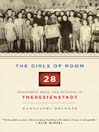
The Girls of Room 28: Friendship, Hope, and Survival in Theresienstadt
By Hannelore Brenner


Brenner, a Berlin-based journalist, focuses on 10 former child survivors, women in their late 70s, who went through the Theresienstadt concentration camp during the Holocaust. The insights of the survivors and stories of the camp's victims are unforgettable and full of poignant humanity, conveyed through letters, photos, diaries and remembrances.


Stella: One Woman's True Tale of Evil, Betrayal, and Survival in Hitler's Germany
By Peter Wyden


What happened in Nazi Germany to turn a fondly remembered childhood Jewish classmate into a serial murderess and tool of the Gestapo? Seeking answers, Peter Wyden traveled back into his own past. Wyden tells the story of Stella Goldschlag, whom he knew as a child, and her journey to noteriety as a "catcher" in wartime Berlin who hunted down hundreds of hidden Jews for the Nazis. The result is this deeply personal work, a true-life Sophie's Choice, unique in Holocaust literature.


The Entertainer and the Dybbuk
By Sid Fleischman


Motivated to create a personal remembrance of the 1.5 million Jewish children killed in the Holocaust, Fleischman pairs Freddie, a struggling, ex-GI ventriloquist, with Avron, the ghost of one such victim, in a short, provocative tale that leavens the tears with laughter. Avron's wisecracking will counterbalance matter-of-fact accounts of Nazi cruelty for young readers, but it's likely to be older ones who will best appreciate the novel's eloquent "inner voice" of conscience, which takes on a definite symbolic cast and the way in which Freddie's public and private identities shift as the story progresses.


Sexual Violence against Jewish Women during the Holocaust
Edited By Sonja Hedgepeth and Rochelle G. Saidel


These essays, describing experiences of forced sex, "sex for survival," prostitution, sterilization, abortion, and general sexual humiliation, add greatly to what is known about the lives of Jewish women during WWII. Much of the content here is a philosophical extension of first-person accounts of sexual torture. The fact that this exhaustive volume represents the first set of essays on the subject written in English underpins a fundamental truth held by the editors: while English-speaking countries are comfortable discussing these horrors, the fates specific to the murdered women and survivors of sexual assault are considered by many to be too shameful for discourse.


A Partisan's Memoir: Woman of the Holocaust
By Faye Schulman


Faye Schulman was a happy teenager learning to become a photgrapher when the Nazis invaded her small town on the Russian-Polish border. She had a loving family, good friends and neighbours, most of whom where soon lost in the horrors of the Holocaust. But Faye survived, and the photographs she took testify to her experiences and teh persecution she witnessed. Decorated for heroism by several governments, Schulman, now in her eighties, tells an extraordinary story not just of survival but of struggle and resistance against oppression.


Remembering Survival: Inside a Nazi Slave-Labor Camp
By Christopher R. Browning


Employing the rich testimony of almost three hundred survivors of the slave-labor camps of Starachowice, Poland, Christopher R. Browning draws the experience of the Jewish Prisoners, the Nazi authorities, and the neighboring Poles together into a chilling history of a little-known dimension of the Holocaust. Combining harrowing detail and insightful analysis on the Starachowice camps and their role in the Holocaust, Browning’s History is indispensable scholarship and an unforgettable story of survival.


Wednesday, May 11, 2011

Against Forgetting - Concert by Choral Arts

Against Forgetting: A Concert of Remembrance for Victims of the Holocaust

Do not miss this moving concert of remembrance, featuring works by Gyorgy Sviridov, Herbert Howells and Leonard Bernstein. The program will also include premieres of commissioned works by Giselle Wyers and Eric Barnum and a performance of John Muehleisen's moving "When All is Done" for chorus and trumpet. Composers will be present for these performances.

Friday, May 20 at 7:00pm
St. Mark's Cathedral, Seattle

Saturday, May 21 at 7:00pm
Bastyr Chapel at Bastyr University, Kenmore

www.choral-arts.org for tickets and more information