"Studying the Holocaust changed the way I make decisions." - Student
Showing posts with label Antisemitism. Show all posts

Monday, July 30, 2012

Anniversary

This Saturday, July 28th, marked the six year anniversary of the shooting at the Jewish Federation, in the same building as the Holocaust Center. Today we recited the Kaddish for Pam Waechter and paused for a moment of reflection here in our office.
Director Dee Simon addresses the group

Tuesday, November 9, 2010

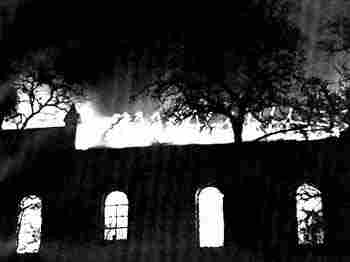
72 Years After Kristallnacht


Kristallnacht -- literally, "Night of Crystal," is often referred to as the "Night of Broken Glass." The name refers to the wave of violent anti-Jewish pogroms which took place on November 9 and 10, 1938 throughout Germany, annexed Austria, and in areas of the Sudetenland in Czechoslovakia recently occupied by German troops.


Instigated primarily by Nazi Party officials and members of the SA (Sturmabteilungen: literally Assault Detachments, but commonly known as Storm Troopers) and Hitler Youth, Kristallnacht owes its name to the shards of shattered glass that lined German streets in the wake of the pogrom-broken glass from the windows of synagogues, homes, and Jewish-owned businesses plundered and destroyed during the violence. (USHMM - read more)
How did religious leaders in the US respond?
The events of November 9, 1938 pogrom sparked a wave of outrage among U.S. religious leaders. In the weeks following November 9, 1938, there were numerous editorials, radio broadcasts, and sermons. In a few cases – like the historic Church of the Pilgrimage in Plymouth, Massachusetts – local Christian clergy invited their Jewish colleagues to address their congregations for the first time. (USHMM - read more)

Photos:
Top: Photographer unknown. Synagogue Burning in Siegen, Germany. 1938. Photograph. The Pictorial History of the Holocaust, New York.
Middle: Photographer unknown. Bystanders view the smashed windows of a Jewish shop. 1938. Holocaust Education & Archive Research Team, Germany. Kristallnacht. Web. 9 Nov. 2010.
Bottom: Photographer unknown. Destruction of the Synagogue in Memel . 1938. Holocaust Education & Archive Research Team, Memel. Kristallnacht. Web. 9 Nov. 2010.

Monday, October 19, 2009

Students write letters to synagogues defaced with graffiti

Students at Alternative School #1 in Seattle wrote letters to the congregants of the synagogues defaced with antisemitic graffiti.

(See entry, "Swastikas painted on Seattle synagogues.")

Josephine Cripps is one of the Holocaust Center's master teachers and frequent consultant to the Holocaust Center's educational programming and materials.

Excerpts from the students' letters:

Dear Sephardic Bikur Holim Congregation,

My name is S. and I'm in the Holocaust studies class at Alternative School #1. Recently my teacher Jo gave us an article to read. I read the article and learned that two of your synagogues had been defaces by images of swastikas. I also learned that some of the nearby houses had also been vandalized. This fact outrages me...This sort of thing should not be happening in Seattle or anywhere else....


Dear Sephardic Bikur Holim Congregation,

...I never really thought that antisemitism existed in Washington until now. I am so sorry. I know that if someone painted hate symbols on my home I would fee awful. Not only would I feel awful, but also scared. I wish that I could say that I know what its like, but I don't. And I can't even start thinking of how you must feel. I am outraged. It makes me so upset that people think it's okay to disrespect others, but in such a way like this...well, it's absolutely horrible. I want you to know that you are in my prayers...

Dear Bikur Cholim,

My name is D. I have recently heard about the swastika graffiti that has vandalized your synagogue and I am agitated by that, but also deeply sorry. I am studying the Holocaust in school so I know what that symbol symbolizes. I am really, really sorry. I do hope that it doesn't happen to anyone again....


Dear Sephardic Bikur Holim Congregation,

Though I haven't experienced any hate crimes against me, I can only imagine how it feels having swastikas painted on your synagogue and homes. It is most likely a terrifying and infuriating experience. Keep in mind that though there may be ignorant people who do uncivil acts of hatred towards your religion, lots of people in Seattle care about this issue and re more than willing to support you, including me.


Dear Sephardic Bikur Holim Congregation,

My name is J. I am writing to let you know I stand by your side. I live right in your neighborhood. I feel that you need support. So you will get it. I am studying the Holocaust at Alternative School #1. I will stop at nothing to help. I will write to see how you're doing, and if you choose you can write back. I am one of your neighbors. My twin and I will keep an eye out and report anything suspicious to the police.

Thursday, September 17, 2009

Swastikas painted on Seattle synagogues highlight need for education, tolerance

Combating Hate with Knowledge
The Seattle Times
September 17, 2009


The swastikas painted on two synagogues in Seattle's Seward Park neighborhood are a stark reminder that hate and prejudice live. Guest columnists Laurie Cohen and Delila Simon say the vandalism is a reminder that people must denounce hatred when they see it.

By Laurie Warshal Cohen and Delila Simon
Special to The Seattle Times


WITH a splash of paint, in the dark of night, some youngsters in Seattle have reminded us that hate crimes, ignorance and intolerance are ever-present, even in our own backyard. Swastikas painted on two synagogues recently in Seward Park are a stark reminder that each of us has the responsibility to shine a light on prejudice and hate whenever and wherever we encounter it.

The swastika graffiti drawn on the synagogues in one of our own Seattle neighborhoods challenges us as a community and as individuals to confront the roots of hate crimes such as this one. It is not enough to tolerate our differences; we must learn to respect our diversity. We must learn to be the ones who stand up to hate and to violence.

Sad to say, the experience of such intolerance can be found every day in almost every area of our lives. Students come up against bullying in our schools. The Muslim community has suffered a narrow-minded anger and prejudice since the tragedy of 9/11. In recent news reports, we see instances of intolerance with anger and hateful speech drowning out thoughtful and reasoned disagreement or discussion.

Whether in the blatant form of swastikas or the more subtle offensive comment, the origin is the same: intolerance. And if we do not stand up when we see it, and teach our children how unacceptable it is, we all remain in the dark.

Since the Holocaust, the swastika has become a symbol of what could happen if hatred is fostered and left unchecked. No matter who painted the swastikas — no matter what motive — they picked this symbol and they selected synagogues to display it. Symbols are powerful in our culture. This one has tragic historical meaning for humanity, but especially for Holocaust survivors who witnessed swastikas scribbled on the shops owned by their parents in Germany on Kristallacht — November 9-10, 1938.

After the recent shooting of Stephen Tyrone Johns at the United States Holocaust Museum in Washington, D.C., museum director Sara J. Bloomfield made the following statement: "The Holocaust did not begin with mass murder. It began with hate. The Holocaust reminds us of the dangers of indifference and unchecked hate — and that each of us has a responsibility to stand up to it."

We all know the tragic consequences of bigotry, prejudice and hatred. The Washington State Holocaust Education Center's mission of teaching and learning for humanity puts it on the front lines of educating our young people. With a multipronged approach, we help students study the Holocaust in the context of human rights and genocide.

As an outcome of our educational efforts we have witnessed students saying they will no longer accept bullying in their classes. They know the difference one person can make. A Lynnwood High School student stated, "After studying the Holocaust and hearing a Holocaust survivor speak, I feel it is my job to help others. I can't just let things happen anymore."

Teaching about the Holocaust is a springboard for connecting lessons of the past to current issues of intolerance in our classrooms. Learning about prejudice and the roots of genocide are other important lessons. Our children will inherit a more diverse world. They are depending on us to create pathways toward a more inclusive society. At the Holocaust Center, we know this can be done through education.

We know that the slogan "Never Again" has fallen short of reality as we are living in an age of modern genocide. We should have learned by now that we cannot wait as bystanders or victims, we must act. We must teach our children to stand up for what is right, for the betterment of our community, our region and our world. We must denounce hatred when we see it and embrace the diversity of our fellow human beings with whom we share this planet.

Laurie Warshal Cohen, left, and Delila Simon are co-executive directors, Washington State Holocaust Education Resource Center.

Thursday, July 9, 2009

On hate groups: 'You never, never decrease the problem by ignoring it'

KOMO News

SEATTLE -- An organization that tracks hate groups says records show there are more such groups now than ever before.

In an effort to help determine why, KOMO News got an exclusive interview with a member of the Aryan Nations and with those determined to stop the hate....

Hate groups up 50 percent
The Southern Poverty Law Center tracks racial hatred. In the last eight years, the center reports the number of hate groups has gone up 50 percent. They count 962 -- the most ever on record.

Read article

Note - the comments that follow the article are equally interesting...

Tuesday, June 16, 2009

Saint George’s Students Finish Study of Holocaust with Visit to U.S. Holocaust Museum on Same Day as Shooting

SPOKANE, WA – Thirty Saint George’s middle schoolers who studied the Holocaust in class have just returned from a five-day tour of Washington DC landmarks that included the disconcerting experience of visiting the U.S. Holocaust Memorial Museum the same day it was attacked by a neo-Nazi gunman.

The students and two Saint George’s teachers toured the museum from 10:30 – 11:30 a.m. on Wednesday, June 10, and were on the opposite side of the museum building just over an hour later when the shooting occurred at 12:50 p.m. They were not in any immediate danger and didn’t learn what happened until later that day.

“It was a lesson we weren’t counting on, but it certainly reinforced what they had learned about hate crimes,” says Ruth Ann Johnson, SGS Middle School English teacher who was on the tour. Her 7th grade class reads Anne Frank’s diary, leading to student research projects on topics such as the Kristallnacht persecutions of the Jews and Nazi concentration camps.

The 7th and 8th grade students on the tour took both their visit to the museum and the news of the shooting very seriously. “We had an excellent discussion about the reality of violence that specifically targets certain people,” says Johnson. “This is why I teach the Holocaust, because this still happens today.”

The students’ tours that day had a broader theme of remembering acts of violence. They had begun with a tour of Ford’s Theater where President Lincoln was shot, before viewing the Holocaust Museum and ending their day at the Pentagon memorial to the victims of the September 11th attack. Now they have something else to remember from that day that will keep the lessons they learned in class very real for a long time to come.

Johnson serves on the Washington State Holocaust Education Resource Center’s advisory board. The Jewish Foundation for the Righteous has named her an Alfred Lerner Fellow at its Summer Institute for Teachers, and she has toured Holocaust sites in Amsterdam and Berlin on educational trip sponsored by the Holocaust Center and Museum Without Walls.

To arrange an interview with Ruth Ann Johnson about the school’s Holocaust curriculum and the students’ experiences in Washington DC, contact John Carter at 466-1636 x397 or at john.carter@sgs.org.

Thursday, June 11, 2009

Shooting at the United States Holocaust Memorial Museum (USHMM)

All of us at the Holocaust Center send our colleagues at the USHMM and the family of Officer Johns our condolences, thoughts, and prayers for safety and healing in this difficult time.

Such acts of violence and hatred reiterate the need for the work we are doing.

Holocaust museum closed in tribute to slain guard (CNN)

The President and Secretary of the Interior Ken Salazar offer condolences.
From the White House Briefing Room Blog:


President Obama:
I am shocked and saddened by today’s shooting at the U.S. Holocaust Memorial Museum. This outrageous act reminds us that we must remain vigilant against anti-Semitism and prejudice in all its forms. No American institution is more important to this effort than the Holocaust Museum, and no act of violence will diminish our determination to honor those who were lost by building a more peaceful and tolerant world.

Today, we have lost a courageous security guard who stood watch at this place of solemn remembrance. My thoughts and prayers are with his family and friends in this painful time.

Secretary Salazar:
Today, we witnessed an act of violence and hatred in one of our world's most sacred sites of remembrance. This horrible crime took the life of Officer Stephen Tyrone Johns, whose courage in the line of duty saved lives and protected the hallowed halls of the Holocaust Museum. Americans' thoughts and prayers tonight are with Officer Johns’ family.

We are also reminded of the great sacrifices our law enforcement officials, including security guards and the Park Police who protect the National Mall, make every day on our behalf. This tragic act of violence only reaffirms the lessons of peace and human dignity that the Holocaust Museum teaches.